
From UVic Alum to Archipelago Developer: FishVue AI in the Classroom
Archipelago developer Jacob Lower visited the University of Victoria to explain modern EM video review and how FishVue AI supports faster, high-quality data review through computer vision and responsible deployment.
January 23, 2026
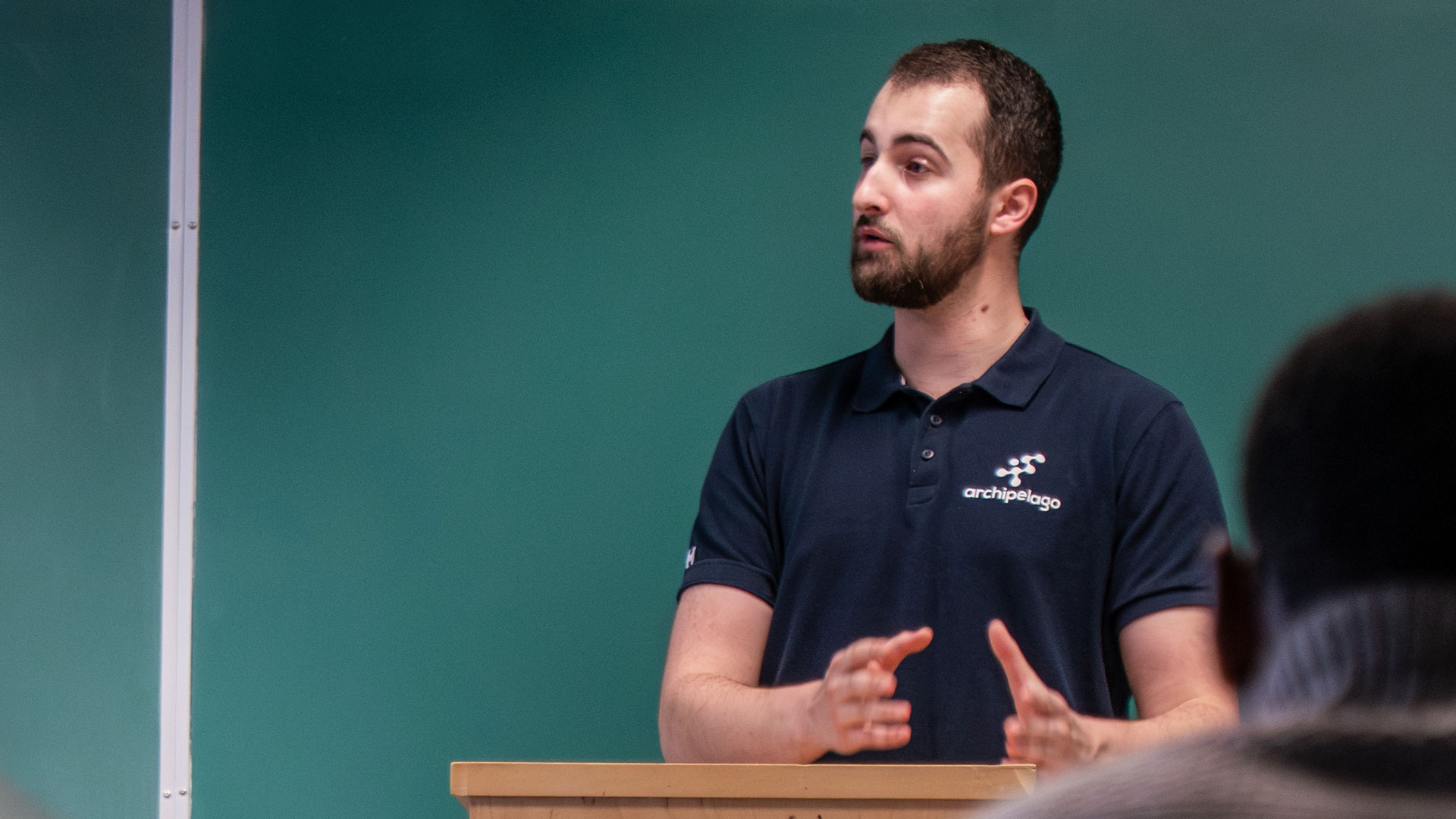
One of our extremely talented developers, Jacob Lower visited the University of Victoria (UVic) to share how Archipelago is advancing fisheries monitoring with computer vision and the FishVue platform. As a UVic alum, Jacob graduated with a B.Sc. in Computer Science in 2020, so it was a full-circle moment to see him back in the classroom speaking with students about the work he has been building here at Archipelago.
Jacob walked students through what “video review” actually means in modern Electronic Monitoring (EM), from trip profiling and gear set and haul events, to catch composition, handling, sizing, sorting and storage, counts, fate, compliance checks, and CPUE (catch per unit effort).
He also highlighted how FishVue AI supports reviewers with an AI-assisted workflow, including accelerating or skipping through sparse or uneventful footage, slowing playback when detections occur, and reducing overall review time while protecting data quality and accuracy.
A key theme was responsible scaling, particularly sovereign data storage and sovereign AI training. In practice, that means EM data can remain in the country of origin, processing can occur within secure local networks, and models are validated and version-controlled before seamless production deployment. This modular pipeline approach puts the development and deployment of computer vision models into the hands of users with deployments that can run in the cloud, on-prem, or locally.
Jacob also shared examples from our UVic research collaboration, including fishing activity detection (including GPS-only approaches), species classification, trap tracking and counting with privacy safeguards, discard action detection, and early work on monocular length estimation using depth AI.
We are proud to see our team investing time in knowledge-sharing and helping students understand the practical, real-world work behind sustainable fisheries and providing potential opportunities for capstone projects and collaboration with UVic students in future research efforts.