
Meet Fred Burgess: Operations Manager, Environmental Services
Fred Burgess joins Archipelago as Operations Manager of Environmental Services. He talks about the projects that shaped him, why community priorities belong at the centre of restoration work, and why he has no interest in steering the ship alone.
September 3, 2026
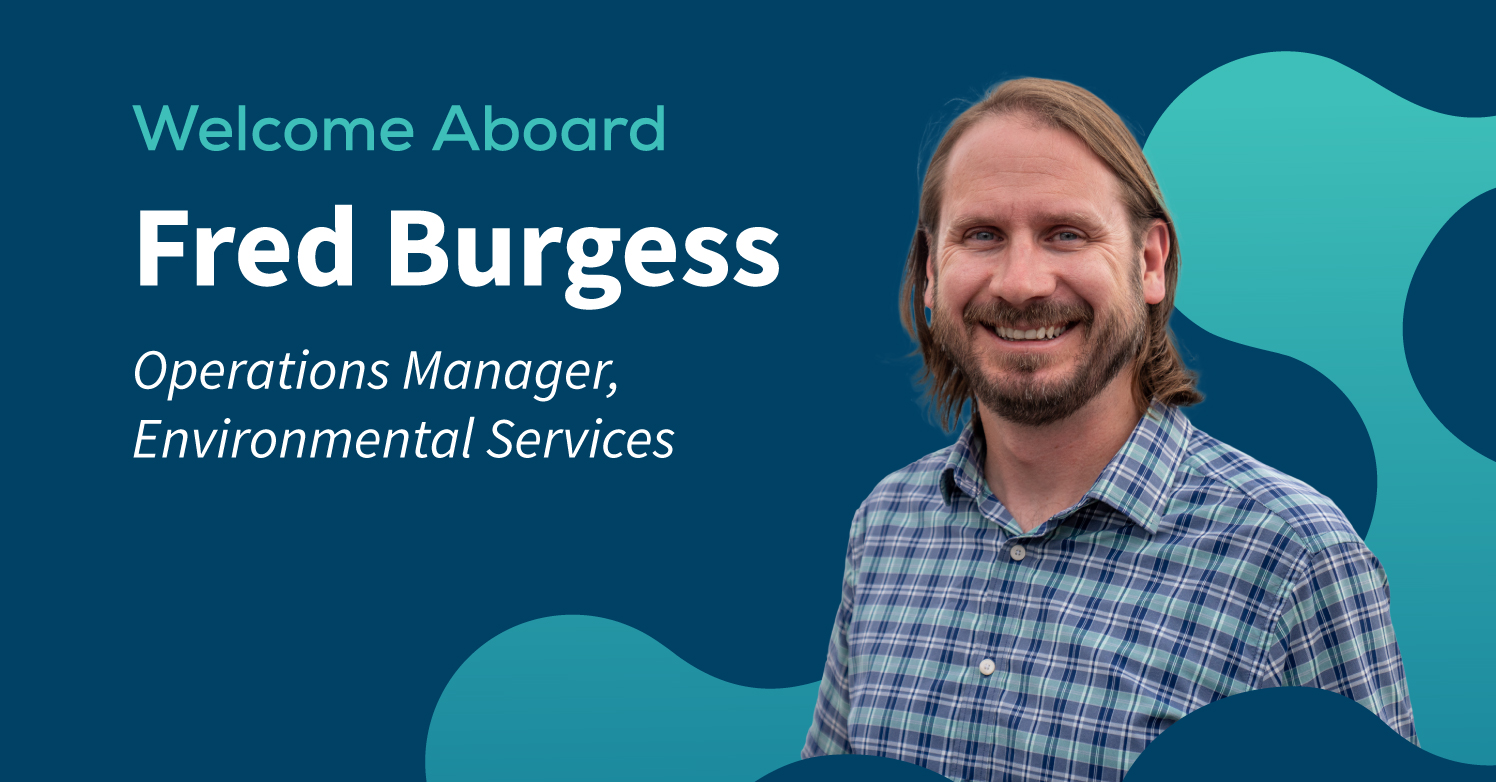
Fred Burgess has joined Archipelago as Operations Manager of Environmental Services. He oversees operations for the group that delivers our coastal planning and design, habitat assessments, environmental monitoring, and scientific diving work.
Fred comes to us after 15 years in environmental consulting, most of it on Vancouver Island and across BC. He spent the first decade as an aquatic biologist before moving into team leadership, and arrives having most recently run an ecology and biodiversity group of more than 30 people.
A start in environmental work
Fred’s first decade in the field was spent learning it from the ground up. He studied environmental engineering technology at Georgian College in Ontario, then moved west to Victoria where he completed a Bachelor of Science in Environmental Science at Royal Roads University. He would return to Royal Roads years later for a Master of Science in Environment and Management at the same school.
His graduate research examined coastal ocean dynamics near traditional Indigenous clam gardens in the Salish Sea. Clam gardens are built slowly, rock by rock, over spans of time that make any modern project schedule look brief. Experiencing and studying these eco-cultural landscapes up close changed how he reads a shoreline.
That perspective carries into his broader ecological work, where he believes that local community priorities and cultural context should be key factors in shaping appropriate restoration, enhancement, and offsetting projects.
His first role as an aquatic biologist was at a small firm he still speaks about with real appreciation, a shop he describes as having some of the best scientists he could have learned from in those early days. They trained him hard for a year, he took it all in.
Shortly after moving to a large multidisciplinary consultancy, and before his onboarding paperwork was finished, Fred was handed an aquatic baseline program for a mine in northern British Columbia. There was no team in place and no equipment plan. Fred had to buy all the gear and assemble the team. He ran the program in subalpine country most people never see.
“It went really well,” he says. “That was where I really fell in love with consulting as a career. When those opportunities arise, you have the chance to stand up and do something really cool.”
He counts it as one of the projects he is proudest of, and he redirects the credit to the training that got him ready for it and the leaders who trusted him to take it on.
He later spent time at a consultancy focused on Indigenous engagement, work he describes with respect for the people who are dedicated to working within and between many different cultural and community worlds. His summary of what he learned is practical. Start early, communicate often and honestly, and expect that the process is complex no matter how well you plan.
Leading a technical team through change
Most recently, Fred was operations lead for an ecology and biodiversity practice across the Pacific and northern regions of Canada. During his time in the role, the team went through substantial growth and an acquisition where two teams of ecologists become one. Fred handled strategic direction, resourcing, and workload balance while onboarding senior hires and transitioning staff into unfamiliar systems. Alongside tackling these operational challenges, Fred always keeps one foot firmly planted in technical work, leading environmental assessment, monitoring, and permitting work at scales from large mining projects to small municipal infrastructure projects. By maintaining this balance, Fred strives to be a leader his team can count on to both keep things running smoothly on the business side, while also providing technical oversight on the work they do.
“Leading a team of technical staff through periods of change is something I’ve spent much of my career doing,” he says. “I feel very much at home jumping in to lead the growing Environmental Services team here at Archipelago.”
Why Archipelago
Fred is candid that the shape of the business is part of what interested him. Environmental Services is a consulting practice operating inside a company built largely around products and services, and he sees that as a useful vantage point rather than an oddity.
The water itself mattered too. His technical background is primarily in freshwater aquatics with occasional deviations into saltier waters like with his master’s thesis and through project work here and there. But the central theme to Fred’s career has always been water, so diving deeper into Archipelago’s marine work is a natural and welcome next step.
Two days into the job, his read on the team was already firm.
“One of the biggest things they have going for them is that they are a really cohesive team, a group of people that collaborate with and feel accountability for each other,” he says. “A team like this is ready to take on whatever exciting times the future has in store for us.”
“I joined Archipelago because they were the right team in the right place for me to provide the most value, and that’s ultimately what I’m here to do, support the people and business as much as I can so they can keep doing the incredible work they do.”
The first 90 days
Fred’s near-term focus is on learning the systems already in place and streamlining what can be streamlined without slowing down people who know their work.
“I’m about removing barriers, not putting them up,” he says.
After that, he plans to represent the group externally, working through his contacts across the environmental sector to find partnerships and opportunities. Looking further out, he would like to see the department broaden into new sectors and possibly new technical disciplines, including the freshwater aquatics expertise he brings with him.
Asked where he sees the hardest tension in environmental work right now and into the future:
“I’d have to answer climate change. Things are changing and that change is a constant for our world now, so any ideal solution is a moving target.”
What he expects of the team
Fred’s expectation of the people around him is short. Accountability to yourself, to your colleagues, and to our clients.
“A team is functioning at its best when it requires me to instruct what comes next less and less,” he says. “I’m not here to command or control, this is a team of professionals who are experts in their fields. I’ll take the wheel when we need that, but I’m not here to steer the ship alone. It’s a team effort.”
He wants clients to experience the group the same way, less as a contractor that disappears and returns with a document, and more as an extension of their own team.
“The work is really putting ourselves in their shoes, figuring out what the priorities are, and maintaining trust that we’ve got their interests at heart. We are forming a project team together to get the work done.”
Asked about his favourite part of the job on a good day, he did not name a deliverable or a milestone. He talked about being stuck on a problem with colleagues and working it out together, putting in the time and effort so that no one person has to face a challenge alone.